← Projects
Woodshed
2023–2025
Woodshed was a platform with the mission to provide modern music education with the mission to teach students how to make the music they listen to, without classical theory, notation, or instruments.
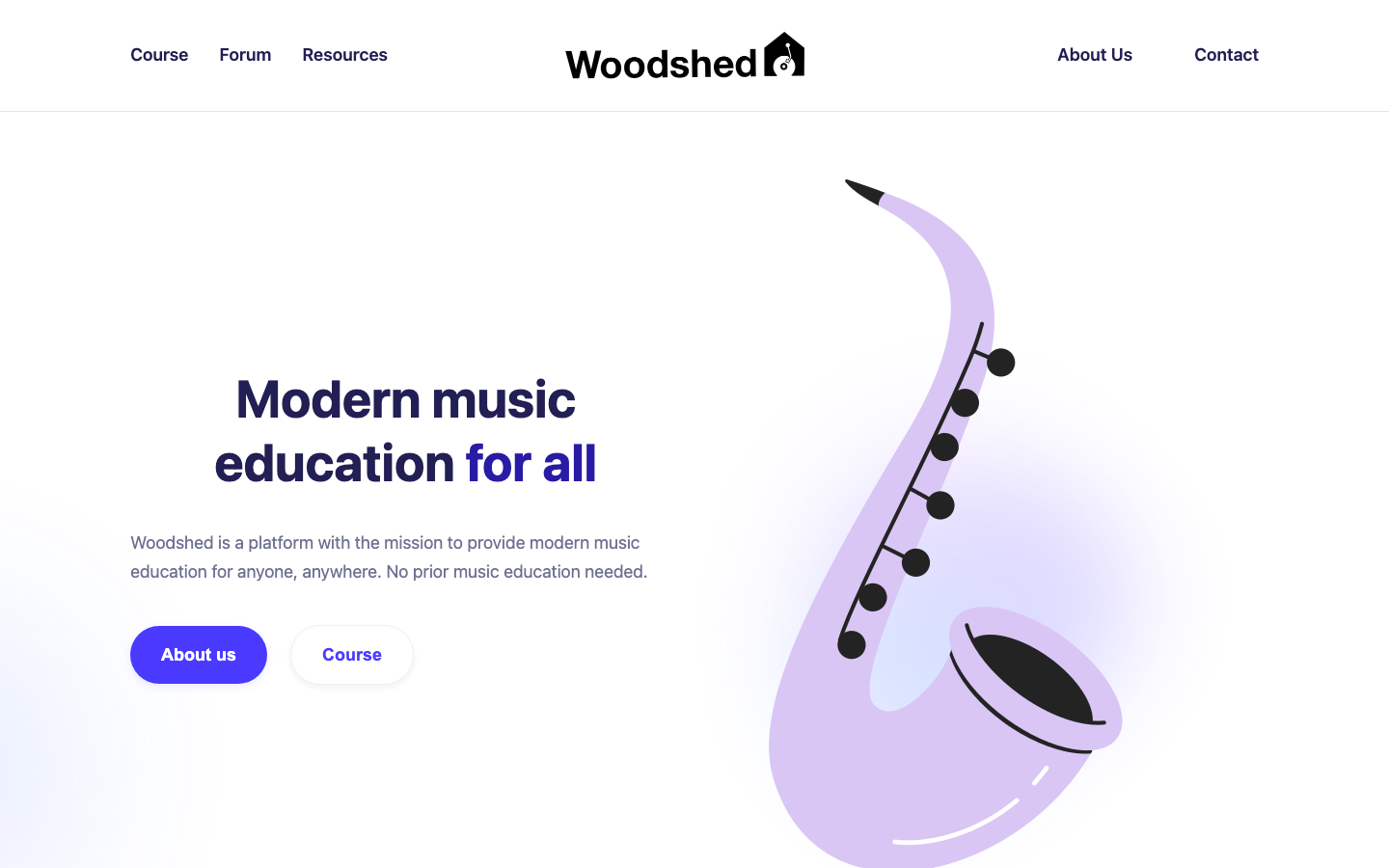
The homepage, from its last archived copy (March 2025).
Details
Role
Founder
When
2023–2025
Funding
Tsai CITY, Collab, Angels
Overview
“Why start with teaching Beethoven when you can start with Playboi Carti?” Woodshed had a course with interactive modules modeled after beat sequencers (inspired by Dennis DeSantis’ work at Ableton’s Learning Music), where students learned how to program some of their favorite beats. The site also had resources, curricula, and recommended listening by genre for further learning, and an external forum (“The Shed”) for students to engage with each other.
Background
To woodshed is jazz slang for isolating yourself from your band to practice intensely. I grew up a jazz saxophonist and classical pianist. When COVID hit, at sixteen, I was lost within my music education: I’d learned purely through practice, without the cultural and dialogic relationship with music that makes you want to create music — and jazz, in its purest form, is real-time, synergistic creation of music with others. I took nearly a year off my instruments and spent the rest of 2020 listening instead, with Spotify as my classroom, and learned all about the music my peers were listening to and making outside of the classroom. Everything I wanted to learn next was online, but the path through it was convoluted, so I set out to build Woodshed.
Context
- Roughly 2,000 hours into learning modern music and its pedagogies, and concurrently building modules and curriculums for local students and schools
- The site was hosted in Webflow, with custom modules built from HTML/CSS/JS
- 14 resource pages and 10 genre listening guides
- Used in 50+ schools in 5 states
Modules
Woodshed’s lessons were module-based and encouraged students to learn by playing with real patterns instead of reading notation.
Build a beat: place drum hits on a 16-step grid, press play, then hear the same pattern on another kit.
Mix and match loops: start and stop loops that join on the next bar, one per instrument.
Ask, then answer: two phrases start the same, and students play with variation in motifs.
Library
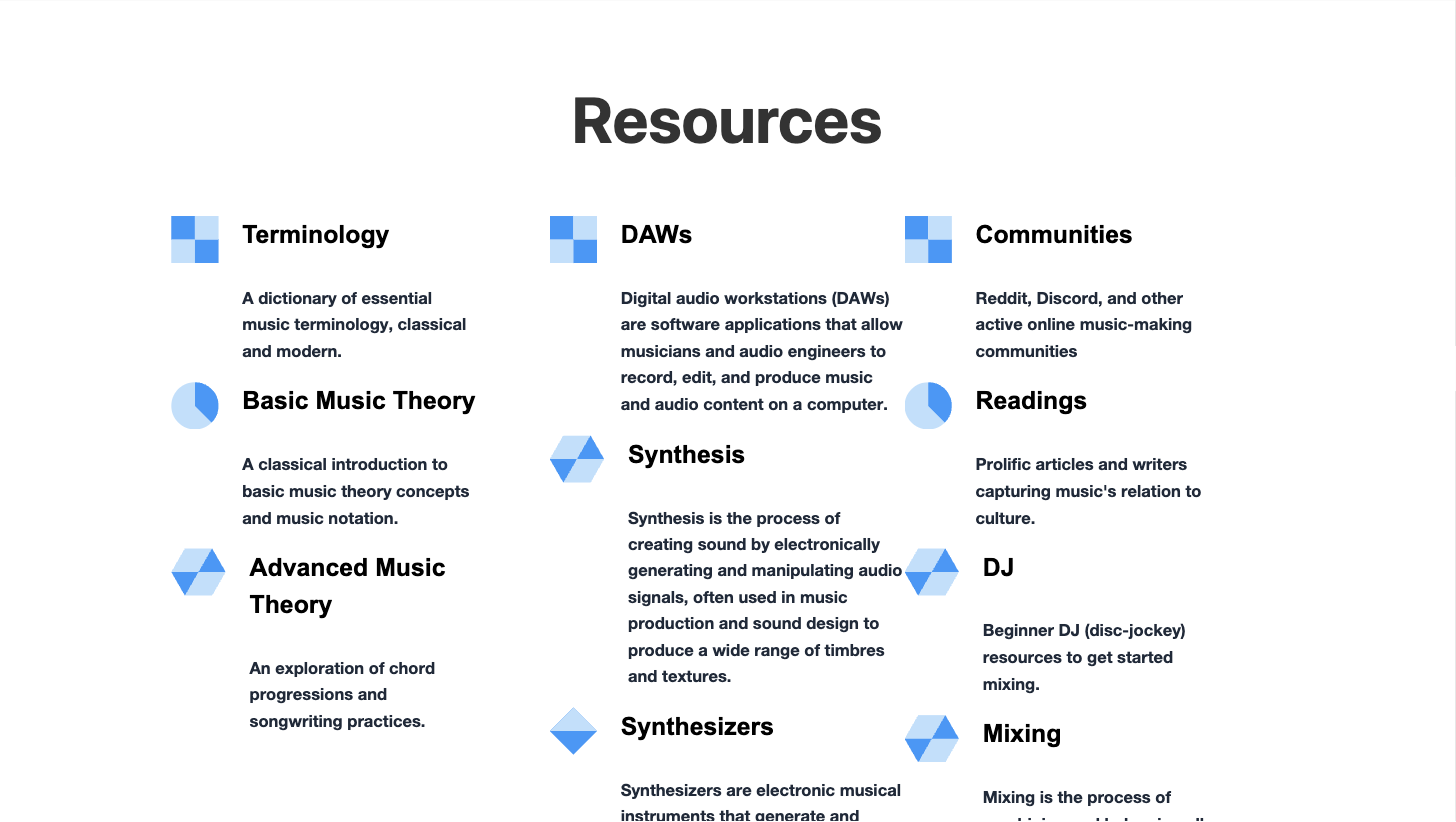
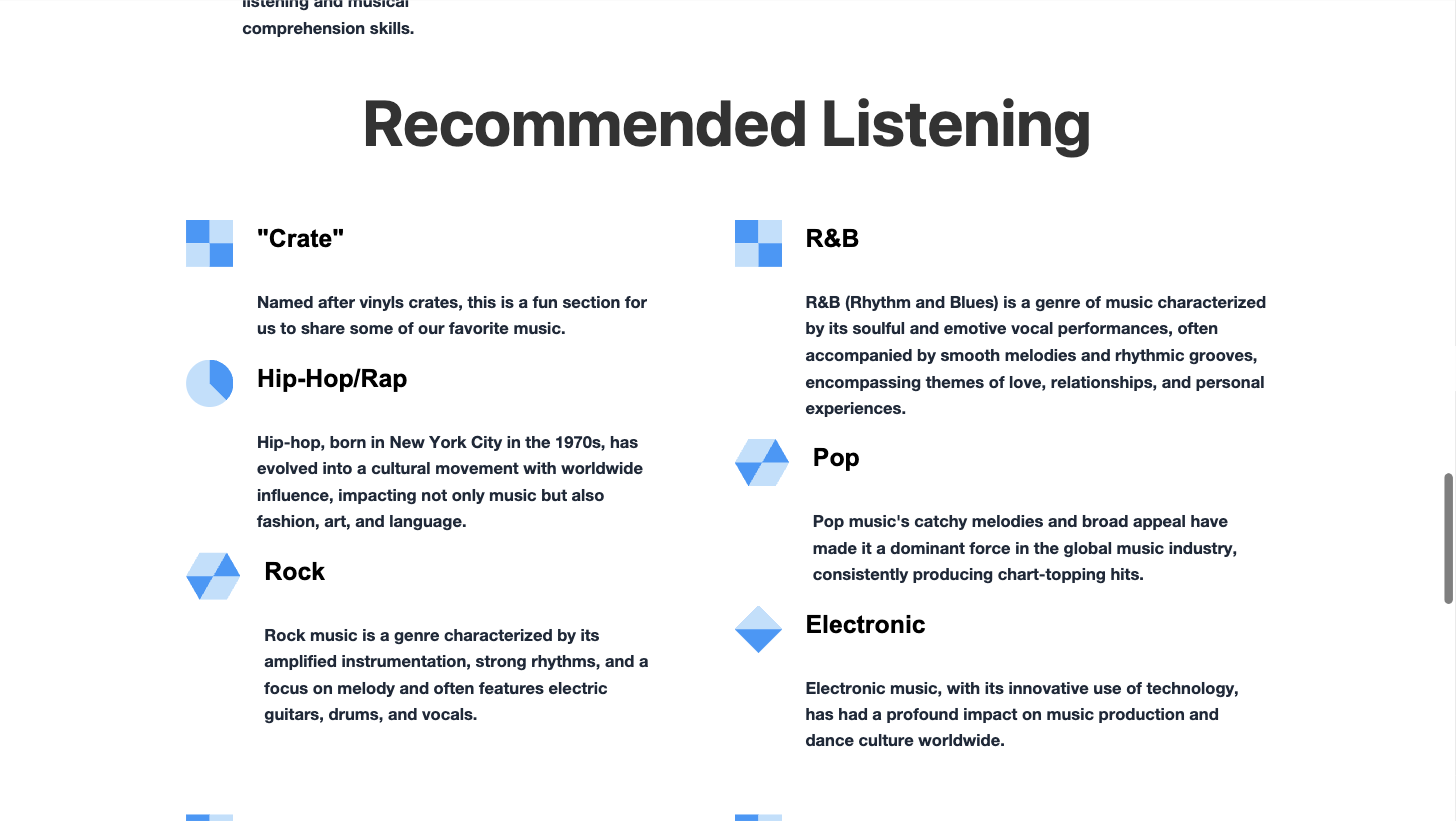
Resources and genre guides. Most genre pages broke into subgenres with notable artists and albums. Woodshed’s Crate opened with my favorite album, Frank Ocean’s Blonde.
Outcome
Woodshed was used in 50+ schools in 5 states. I took it down to focus on building Eapy and finishing my degree, and am in the process of rebuilding it more comprehensively in my free time.
← Projects
Woodshed
2023–2025
Woodshed was a platform with the mission to provide modern music education with the mission to teach students how to make the music they listen to, without classical theory, notation, or instruments.
The homepage, from its last archived copy (March 2025).
Details
Role
Founder
When
2023–2025
Funding
Tsai CITY, Collab, Angels
Overview
“Why start with teaching Beethoven when you can start with Playboi Carti?” Woodshed had a course with interactive modules modeled after beat sequencers (inspired by Dennis DeSantis’ work at Ableton’s Learning Music), where students learned how to program some of their favorite beats. The site also had resources, curricula, and recommended listening by genre for further learning, and an external forum (“The Shed”) for students to engage with each other.
Background
To woodshed is jazz slang for isolating yourself from your band to practice intensely. I grew up a jazz saxophonist and classical pianist. When COVID hit, at sixteen, I was lost within my music education: I’d learned purely through practice, without the cultural and dialogic relationship with music that makes you want to create music — and jazz, in its purest form, is real-time, synergistic creation of music with others. I took nearly a year off my instruments and spent the rest of 2020 listening instead, with Spotify as my classroom, and learned all about the music my peers were listening to and making outside of the classroom. Everything I wanted to learn next was online, but the path through it was convoluted, so I set out to build Woodshed.
Context
- Roughly 2,000 hours into learning modern music and its pedagogies, and concurrently building modules and curriculums for local students and schools
- The site was hosted in Webflow, with custom modules built from HTML/CSS/JS
- 14 resource pages and 10 genre listening guides
- Used in 50+ schools in 5 states
Modules
Woodshed’s lessons were module-based and encouraged students to learn by playing with real patterns instead of reading notation.
Build a beat: place drum hits on a 16-step grid, press play, then hear the same pattern on another kit.
Mix and match loops: start and stop loops that join on the next bar, one per instrument.
Ask, then answer: two phrases start the same, and students play with variation in motifs.
Library
Resources and genre guides. Most genre pages broke into subgenres with notable artists and albums. Woodshed’s Crate opened with my favorite album, Frank Ocean’s Blonde.
Outcome
Woodshed was used in 50+ schools in 5 states. I took it down to focus on building Eapy and finishing my degree, and am in the process of rebuilding it more comprehensively in my free time.